
“She is not finished. She is being made. And when she is made, she will know what it means to carry something ancient on her body.”
— Oral account recorded in rural Zimbabwe, 2011, as recalled by a grandmother to her granddaughter
There are body traditions so old that no written record captures their beginning. They live instead in the hands of grandmothers, in the songs women sing in private, in the quiet instructions passed between generations behind closed doors. The tradition of labia lengthening — the deliberate, gradual manual extension of the labia minora — is one such practice. It has existed, in various forms, across a broad corridor of sub-Saharan Africa for centuries, possibly millennia, and it continues today.
This is not a fringe curiosity. Ethnographic records, oral history collections, anthropological field studies, and modern survey research all point to a tradition that was — and for many communities still is — deeply ordinary. Not a secret rite of extremism. Not a punishment. A practice of preparation, of pride, of intergenerational love passed quietly from woman to woman.
To understand it, you have to set aside modern frameworks and sit with a different geography of meaning — one where the body is a site of cultural expression, where womanhood is something learned and practiced rather than simply arrived at, and where physical transformation can be an act of inheritance rather than alteration.
Labia lengthening has been documented primarily across eastern, central, and southern Africa — among communities in present-day Zimbabwe, Zambia, Uganda, Rwanda, Burundi, South Africa, Botswana, Namibia, and the broader Great Lakes region. The practice has also been recorded, in different forms and contexts, among certain communities in West Africa and parts of the African diaspora. Each region holds its own version of the tradition, its own reasons, its own ritual weight.
This article explores that history: where it comes from, what it has meant across cultures and centuries, how colonialism attempted to erase it, how it survived in oral tradition, and how it is understood — and practiced — today.
Historical Origins: Before the Written Record
Pinning a precise origin date to labia lengthening is impossible in the way that historians might date a treaty or a coronation. The tradition predates written documentation of sub-Saharan African cultures by a wide margin, and what survives of its earliest forms lives in oral accounts, in the structure of initiation rites, and in the body itself.
What researchers and ethnographers have been able to piece together suggests the practice is ancient. The earliest written Western references appear in European colonial and missionary accounts from the 18th and 19th centuries — and they describe traditions that were already clearly well-established, governed by specific rules, performed at particular life stages, and embedded in ceremony. This was not a new experiment being tried. These were inherited systems.
✦ Did You Know?
Among the Khoisan peoples of southern Africa, elongated labia have been observed and documented since at least the early 19th century by European travellers — and anthropologists now believe the tradition significantly predates that contact. The term “Hottentot apron” — a colonial-era label — was applied in a clinical and dehumanizing context that entirely missed the cultural meaning of the practice. Modern scholarship has worked to reclaim and contextualize what that terminology obscured.
Among the Khoisan peoples — among the oldest continuous cultures on Earth, whose genetic lineage stretches back tens of thousands of years — elongated labia appear in historical records in ways that suggest deep cultural rootedness. Early European travellers wrote about what they saw with a mixture of clinical fascination and colonial condescension, reducing a complex tradition to a label: “the Hottentot apron.” The name was meant to describe the elongated labia minora, and it stuck in Western literature for generations — stripping the practice of its meaning and the women who bore it of their dignity.
But behind that reductive label was a real practice, carried out by real communities, with real purpose. The elongation was understood as a mark of womanhood, of readiness, of belonging. It was not a deformity. It was an achievement.
Across the Bantu-speaking cultures of central and eastern Africa — a vast linguistic and cultural family that stretches from West-Central Africa to the southeastern tip of the continent — similar traditions appear independently, or through shared cultural lineage. The consistency across cultures is striking: labia lengthening was almost universally taught by older women to younger women, began before or around puberty, and was tied to readiness for adult life.
Carried in Voices: The Role of Oral Tradition
In cultures where literacy was not historically the primary mode of knowledge transmission, oral tradition carried the weight that written texts carry elsewhere. Stories, songs, instruction, warning, wisdom — all moved mouth to ear, generation to generation. The knowledge of labia lengthening traveled the same way.
Researchers studying oral traditions in Zimbabwe, Zambia, and Uganda have consistently documented a pattern: the knowledge was held by women, transmitted to young girls by their grandmothers or maternal aunts, and surrounded by a language of care and preparation. It was not coercive instruction in the communities where it thrived as a cultural practice. It was intimate education.
Many women who grew up in communities where the tradition was practiced describe their earliest experiences with it in terms of warmth and connection. The act of being taught — the private conversations about the body, about womanhood, about what it meant to become a woman in that culture — was as significant as the physical practice itself. The knowledge was a gift. A form of love.
“My grandmother sat with me for hours. She told me this was what we do. That her mother taught her, and her mother before. She said when a man lies with you and finds this, he knows he has found a woman who was well cared for.”
— Account from a 52-year-old woman in rural Zambia, documented in a 2017 qualitative study on intergenerational body practices
The oral traditions surrounding labia lengthening often included specific songs sung during the process, particular oils or plant preparations used to soften the tissue, and prescribed postures and rhythms for the manual stretching. This was not informal. It was structured knowledge — a curriculum passed between women.
In some communities, the instruction happened during broader initiation periods, when girls were removed from ordinary life and brought into an intensive period of cultural education. Labia lengthening was one component of a much larger transmission of womanhood knowledge: domestic skills, relationship wisdom, sexual knowledge, community roles. The body was one text among many being written during that period.
The importance of oral tradition cannot be separated from the history of the practice’s survival. When colonialism disrupted communities, closed initiation schools, and criminalized or shamed traditional practices, the knowledge didn’t die because it wasn’t written anywhere to be burned. It moved. It went underground. Grandmothers whispered it. Aunts showed it in private. The tradition survived precisely because it was oral — intimate, portable, hidden in the voice.
Regional Variations: One Tradition, Many Expressions
To speak of labia lengthening as a single, uniform tradition would be a significant oversimplification. Across the regions where it has been practiced, the specifics vary considerably — in the age at which it begins, the techniques employed, the social context in which it occurs, and the meanings attached to it.
📋 Regional Comparison: Labia Lengthening Traditions Across Sub-Saharan Africa
In Uganda, among the Baganda, the tradition of okuzina has been documented extensively. Research published in African academic journals and by international health organizations describes the practice as beginning in pre-pubescent girls, taught by grandmothers or aunts, and understood as preparation for adult womanhood. Historically, a woman who had not practiced okuzina was considered unprepared — not in a harsh or punitive sense, but in the way a child who hadn’t learned to cook might be considered not yet ready for adult responsibilities.
In Rwanda and Burundi, the practice called gukuna has received significant scholarly attention. Studies in this region suggest the practice was sometimes carried out later than in Uganda — during or after puberty — and was more explicitly tied to sexual knowledge and the expectation that a woman’s body should be capable of giving and receiving particular forms of pleasure. The lengthened labia were associated with both the woman’s own experience and her partner’s. This framing — that the tradition served both parties in a relationship — appears consistently in the oral accounts gathered from this region.
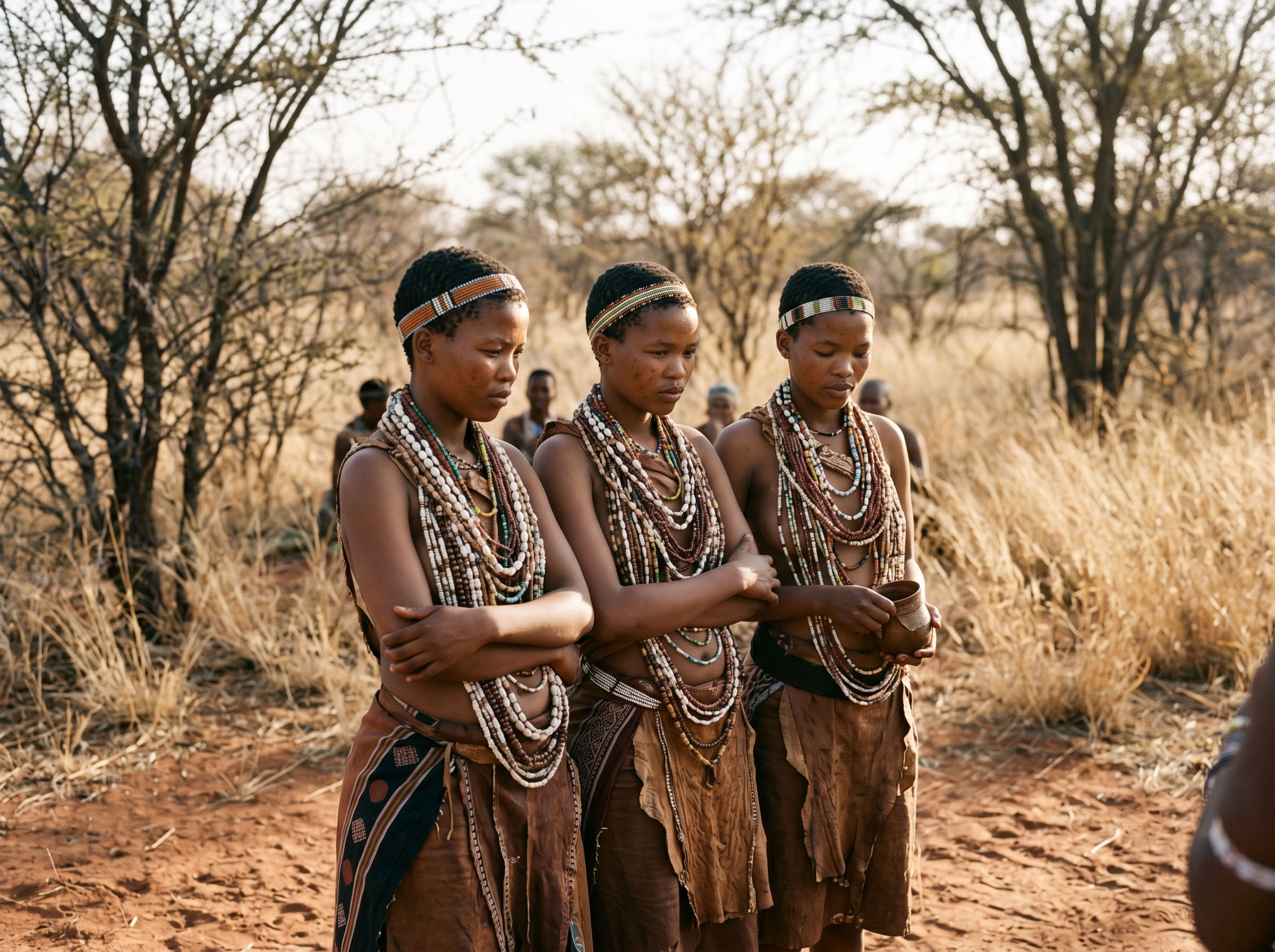
In Zimbabwe and Zambia, the tradition was often embedded in broader initiation schooling. The chisungu ceremony among Bemba-speaking people of Zambia — one of the most extensively studied initiation rites in African anthropology, documented in detail by researcher Audrey Richards in her 1956 work — included labia lengthening as one element of a comprehensive womanhood education. Girls learned not only the physical practice but its meaning: what it signaled to a husband, to a community, to the woman herself.
Symbolism and Meaning: What the Tradition Carries
Across cultures, body modification traditions communicate. They say something about belonging, about readiness, about identity. The tradition of labia lengthening was never, in its cultural home, simply an aesthetic preference. It carried layers of meaning that were readable to those within the culture.
The most consistent meaning found in ethnographic and oral history research is this: the lengthened labia were a mark of womanhood achieved. Not womanhood simply arrived at through biological maturation — but womanhood worked for, prepared for, carried out with intention and care. A woman who bore this modification had sat with the knowledge, had received instruction, had done the daily, patient work over months or years. That was considered an act of character.
📌 Cultural Context
Three Layers of Meaning
- Identity & Belonging: In many communities, elongated labia signaled that a woman was part of a culture, had received its teachings, and was prepared to carry its values into marriage and family life.
- Relational Significance: Historical accounts across the Great Lakes region describe the tradition as linked to the quality of intimate life — a gift to both woman and partner, understood as a form of preparation for adult relationships.
- Intergenerational Bond: The transmission of the practice — grandmother to granddaughter, aunt to niece — was itself meaningful. The act of teaching was an act of love, a passing of something precious from one generation to the next.
In many communities, there was also a relational dimension to the meaning. The elongated labia were understood to have a role in intimate life — increasing sensation, providing additional stimulation, marking a woman as experienced and prepared. Oral accounts and qualitative research studies from Rwanda, Uganda, and Zimbabwe consistently describe this dual significance: the tradition served the woman’s own sense of completeness and also expressed a form of care toward her future partner.
There was, in some communities, a social-status dimension as well. A woman who had practiced labia lengthening was considered to have made an investment in her own womanhood — and this was recognized. In communities where the tradition was universal, not having practiced it carried social weight. In communities where it was one option among many, it carried the weight of deliberate choice.
For many women, the meaning was also deeply personal and private. The knowledge of what had been done — the months of quiet daily practice, the conversations with the older women who taught them — was carried internally as a kind of confidence. Something known that did not need to be announced.
To understand more about how communities across the continent have conceptualized and formalized this tradition, the origins and meaning of labia stretching across African cultural traditions offers a deeper regional breakdown of documented practices.
The Disruption: Colonial Influence and Cultural Shame
If there is a single external force that most disrupted the continuity of labia lengthening traditions, it is the colonial encounter — and specifically the moral and medical frameworks that European powers imposed on African bodies and African cultures.
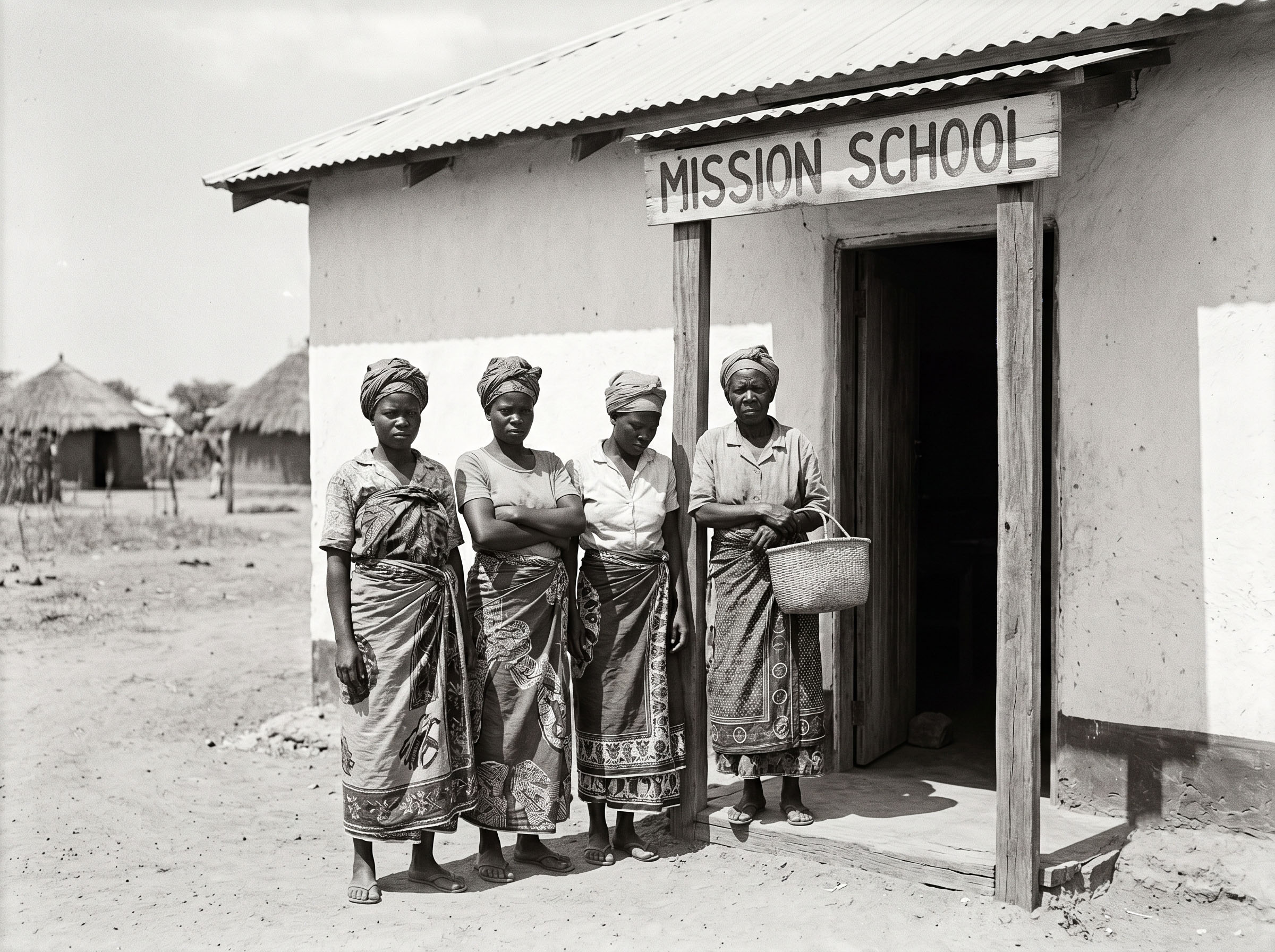
Colonial administration, Christian missionary work, and Western medical discourse converged in the 19th and early 20th centuries to pathologize and shame body traditions across the African continent. Female initiation practices, which had served as the primary vehicle for transmitting labia lengthening knowledge, were frequently targeted as “primitive,” “immoral,” or “unhygienic.” Mission schools discouraged or forbade discussion of such practices. Colonial laws in several territories interfered with traditional gatherings and ceremonies.
The framing used by colonial observers was not neutral. Western scientific interest in the Khoisan people’s anatomy — an interest that manifested in the objectification of women like Saartjie Baartman, who was exhibited in Europe as a spectacle — reduced African women’s bodies to objects of curiosity and ridicule. The derogatory term “Hottentot apron” captured this attitude precisely: the tradition was seen not as culture, but as biological aberration.
This colonial framing had consequences that outlasted colonial rule. Generations of African women absorbed the message — through mission education, through urban modernization, through media — that their traditions were backward, shameful, something to be left behind. Research conducted in multiple countries across the mid-to-late 20th century documented declining practice rates in urban areas and among women with formal education, while rural and elder communities often maintained the tradition.
The shame that colonialism introduced was not always explicit. It worked through omission — the absence of these traditions from the curricula of schools, from the content of newspapers, from the conversations of public life. The message was clear: this is not something a modern, educated woman does. This is something from before.
And yet, it persisted.
Survival: How a Tradition Outlasted Its Silencing
The survival of labia lengthening traditions through colonialism, urbanization, formal education, and globalization is one of the more remarkable stories in the anthropology of body practices. How does a practice that was never written down, never formally institutionalized, and actively shamed by dominant outside cultures survive for generations?
The answer appears to be found in several places simultaneously.
First, the private nature of the tradition was protective. Because labia lengthening was always a women’s secret — taught in private, practiced in private, revealed only in intimate contexts — it did not require public institutions to survive. It needed only one older woman willing to tell one younger woman. That threshold is remarkably low. As long as the will to transmit existed, the knowledge would move.
⚡ In Brief
Why This Tradition Survived
- It required no public institution — only one woman and one girl
- It was oral and private, giving it protection from colonial suppression
- Deep emotional meaning kept motivation alive across generations
- Rural communities maintained continuity when urban centers experienced disruption
- Post-independence cultural pride sparked renewed interest in indigenous practices
- The internet has created new communities of preservation and knowledge-sharing
Second, the emotional and social weight of the tradition served as a motivator to continue it. Women who had been taught by their grandmothers — women for whom the moment of instruction was a cherished memory, a gesture of love, a gift of belonging — often wanted to give the same to the next generation. The transmission was not just about the physical practice. It was about the relationship it represented.
Third, many rural communities simply continued their traditions more or less continuously, largely out of reach of urban-centered modernizing pressures. The disruption was most acute in cities, in mission areas, in communities with high contact with colonial and post-colonial modernity. In villages where the old rhythms of life persisted, the old rhythms of initiation persisted too.
Post-independence Africa saw, in many countries, a renewed interest in indigenous cultural practices as part of broader national identity movements. What had been stigmatized as “primitive” by colonial discourse was reframed as “heritage” — something worth protecting and celebrating. This cultural rehabilitation did not restore labia lengthening to the prominence it once held in all communities, but it created more space for honest discussion of the practice and its history.
The internet has added another dimension. Online communities — sometimes anonymous, sometimes named — have created forums where women who grew up with the tradition share their experiences, where women who learned about it as adults explore it for the first time, and where researchers and writers gather oral accounts before they are lost. The tradition has found new vehicles of transmission without losing its essential character.
Rites and Passages: The Body as Cultural Text
To understand labia lengthening fully, it helps to understand the broader category of practice it belongs to: the body modification that marks life transition.
Across human cultures and throughout recorded history, the body has served as a site where important social facts get inscribed. Tattoos mark coming-of-age in Polynesia. Scarification in parts of West and Central Africa marks lineage and status. Circumcision rituals — for both men and women — function across dozens of cultures as physical markers of the transition from one life stage to another. The body becomes a kind of document that can be read by those who know the language.
Labia lengthening fits within this long and wide tradition of body-as-cultural-text. What it wrote on the body was specific: this woman was prepared. This woman received teaching. This woman crossed from girlhood to womanhood under the guidance of those who went before her.
The rite-of-passage dimension is particularly significant in understanding what the practice meant within its communities. Anthropologists who study initiation — from scholars like Victor Turner, who documented Ndembu rituals in Zambia, to contemporary African researchers working in Rwanda and Uganda — describe initiation rites as having a consistent three-part structure: separation (removal from ordinary life), transition (the liminal period of learning and transformation), and reincorporation (return to community as a changed person).
Labia lengthening often occupied the transition phase — the private, intimate work of transformation that happened before a girl re-emerged as a woman. It was part of what was learned in that in-between time. And the body, when the initiation was complete, carried the evidence of the transformation.
The rite-of-passage framework also helps explain why the tradition was so intimately tied to relationships between women. The older woman who taught was not simply an instructor. She was a guide through a threshold. That role carries its own weight, its own honor, its own responsibility.
For an exploration of how these rites and practices have been preserved and are understood in contemporary communities, efforts to preserve the labia stretching tradition in the modern world documents both the challenges and the quiet persistence of this cultural inheritance.
Myths and Misconceptions: Setting the Record Straight
A tradition that has been as misrepresented as this one inevitably accumulates myths. Some originate in colonial-era distortion. Some reflect modern squeamishness about the body. Some come from genuine unfamiliarity with cultures different from one’s own. It is worth examining the most common directly.
Common Questions & Misconceptions
Modern Perspectives: A Tradition in Transition
The 21st century has brought new contexts and new conversations to labia lengthening. The tradition has not frozen in amber — it continues to be interpreted, recontextualized, and carried forward by women and communities with a range of perspectives.
Within African communities where the tradition originated, the picture is varied. In some rural areas, the practice continues much as it always has — taught in private, carried out during adolescence, integrated into initiation education. In urban areas, the relationship is more complex. Some women raised in cities seek out the tradition as adults, learning it from older female relatives or researching it independently, motivated by cultural reconnection and pride. Others have moved away from it under the influence of formal education, religion, or Western social norms.
Research in Uganda and Rwanda in the 2010s found that younger women’s attitudes toward okuzina and gukuna were shifting — with some embracing the tradition as an expression of cultural identity, others viewing it as optional rather than expected, and a smaller number opposing it on grounds of personal autonomy. What is striking is the complexity of this picture: these are not passive recipients of tradition, but active agents making choices about their own cultural inheritance.
📊 By the Numbers
Research Findings on Labia Lengthening in Africa
90%+
of women in one Rwandan district study reported awareness of gukuna (2010, Culture, Health & Sexuality)
8–10
Years old — the age at which teaching traditionally began in many Ugandan Baganda communities, per ethnographic records
10+
Countries in sub-Saharan Africa where labia lengthening traditions have been documented in peer-reviewed anthropological literature
Centuries
The estimated minimum age of the tradition — earliest Western documentation dates to the 18th century, but oral history suggests far older origins
Beyond Africa, the tradition has found audiences globally. Women in Europe, North America, and Australia — of African heritage and otherwise — have encountered the tradition and, in some cases, adopted it as a personal practice. The reasons vary: curiosity about African cultural traditions, personal exploration of their own bodies, aesthetic preference, or a sense of connection to a lineage of women who transformed themselves intentionally.
This global spread raises questions about cultural transmission, appropriation, and respect. What does it mean when a practice rooted in specific cultural meaning is adopted outside that context? These are genuinely open questions, and different voices in both African and global communities answer them differently. What most agree on is that the tradition deserves to be understood in its full cultural context — not reduced to a sensational curiosity or a medical procedure, but recognized as what it has always been: a human tradition, ancient and living, carried forward by women who found meaning in it.
A Living Archive: What This Tradition Tells Us
The history of labia lengthening is, in many ways, a history of what oral tradition can preserve. Written records could be burned. Formal institutions could be closed. Public practices could be banned. But the knowledge between women — the hand that teaches, the voice that explains, the memory that holds the meaning — traveled through centuries of disruption and arrived here, in the present, still recognizable.
What it tells us about African cultures is that body knowledge was never incidental. The transmission of information about the female body — its capacities, its aesthetics, its role in intimate and social life — was considered important enough to be formalized in tradition, embedded in ceremony, and protected across generations. That is not a mark of a culture that viewed women’s bodies as unimportant. It is a mark of a culture that viewed them as significant.
What it tells us about human culture more broadly is that the impulse to mark transition on the body, to carry heritage in the flesh, to transform oneself as an act of belonging — these are not exotic impulses. They are among the most ancient and widespread of human behaviors. Labia lengthening sits within that much larger story.
And what it tells us about survival is perhaps the most instructive of all. A tradition that was shamed, suppressed, and presumed dead by generations of outside observers is still being practiced — still being taught — still being chosen — by women who find in it something worth carrying forward. That is the nature of culture when it is rooted deep enough: it does not require permission to endure.


