
There are practices quietly kept among women — passed between grandmothers and granddaughters in the early morning hours before the household stirs — that no colonial map has ever captured. Labia stretching, known across various African cultures by names as distinct as kufukuta, okujepisa omukaantu, and gukuna imishino, is one of those practices. It has existed for centuries, encoded into the rhythms of girlhood, womanhood, and the passage between the two.
This article does not approach the subject from a clinical angle, nor does it wade into contemporary political debates. What it does is follow the practice as a cultural historian might — through oral traditions, field ethnographies, traveler accounts, and the careful documentation of communities who have carried this knowledge across generations. The story of labia stretching in Africa is not a story of victimhood or exoticism. It is a story about how human societies construct meaning around the body, and how those meanings become identity.
In Brief
What This Article Covers
- The historical origins of labia stretching in African societies
- Regional variations across Zimbabwe, Rwanda, Uganda, Namibia, and beyond
- What the practice symbolizes — beauty, readiness, identity, and womanhood
- How initiation rites shaped the tradition’s transmission
- The social expectations attached to the elongated labia in traditional contexts
- How the practice has changed in the modern era
- Common myths and misconceptions addressed honestly
The Historical Record: How Far Back Does This Go?
Establishing a firm origin date for labia stretching is the kind of problem that humbles historians. Unlike architecture or ceramic art, body practices leave no physical artifacts. What researchers have instead are two imperfect but instructive categories of evidence: traveler accounts and ethnographic fieldwork.
Among the earliest written references are those from Portuguese and Dutch traders who encountered societies in southern Africa during the 16th and 17th centuries. Their accounts, though filtered through a lens of profound cultural misunderstanding, noted with some frequency that women in certain groups possessed elongated labia — and that this appeared deliberate. These observations appear in the margins of trade logs and in personal correspondence, never as the focus, but as a recorded curiosity that suggests the practice predates European contact by an unknown span of time.
By the 19th century, missionary and anthropological records had grown more systematic. Scholars working across the Great Lakes region of East Africa, in what is now Rwanda, Burundi, and Uganda, documented the practice in enough detail to confirm it was not incidental but intentional, initiated during girlhood, and tied to specific social rites. The German ethnographer Richard Kandt, stationed in Rwanda in the early 1900s, recorded accounts of girls beginning the practice between ages eight and twelve under the instruction of older female relatives.
Oral histories, which many African scholars now argue are as reliable as any written record when properly collected, push the timeline further back. Elders interviewed in mid-20th-century anthropological studies consistently described the practice as “what the grandmothers taught,” placing its origins well beyond living memory — deep in ancestral time.
✦ Did You Know?
The San people of southern Africa — among the oldest continuous cultures on Earth — include references to modified female genitalia in some of their rock art traditions, though scholars debate the precise interpretation of these images. What is not debated is that body modification as cultural expression in Africa has an extraordinarily deep timeline.
Cultural Context: The World in Which This Practice Lives
To understand labia stretching, you have to understand the broader architecture of traditional African girlhood initiation. In many sub-Saharan societies, the transition from girl to woman was not a single biological event — it was a structured, socially supervised passage involving knowledge transfer, bodily preparation, and symbolic transformation. Menstruation might trigger the beginning of this passage, but it was rarely the whole of it.
🌍 Cultural Insight
The Initiation School as Institution
Across much of sub-Saharan Africa, formal women’s initiation schools — sometimes lasting weeks or months — served as the primary vehicle for transmitting adult knowledge. These spaces were governed entirely by senior women and kept deliberately separate from men. Labia stretching instruction, where it existed, took place within this protected context — not as a curiosity but as part of a structured curriculum of womanhood.
Initiation schools, often conducted in seclusion away from the main community and strictly gendered, served as the primary institutions for transmitting adult knowledge to young women. Within these spaces — governed entirely by senior women — girls learned about sexual conduct, domestic responsibilities, medicinal plant knowledge, and, in many regions, the preparation of their bodies for marriage and sexual life. Labia stretching was, in numerous traditions, one component of this larger curriculum.
This is not incidental. The fact that the practice was transmitted within female-only initiation spaces tells us something important: it was not performed for male observation, at least not originally. It was women’s knowledge, held by women, taught by women, and understood within a framework of meaning that women constructed and maintained.
The practice also existed within a cosmology that understood the female body as powerful, purposeful, and in need of cultivation rather than simply reception. In several Great Lakes cultures, the elongated labia were believed to increase sexual pleasure for both partners — a point that older women emphasized when teaching younger ones. This is a perspective that cuts against narratives that frame all traditional body practices as oppressive, while also resisting any romantic oversimplification. The beliefs were complex, and they were held by real communities navigating real lives.
Research from the London School of Hygiene and Tropical Medicine, which conducted extensive fieldwork in Rwanda and Uganda in the 2000s and 2010s, documented that the majority of women who practiced labia elongation reported doing so willingly and that they associated it with positive social identity. This does not mean coercion never occurred, but it complicates any single-axis interpretation of the practice as purely imposed.
Region by Region: How the Practice Varies Across Africa
One of the errors commonly made in popular discussions of labia stretching is treating it as a single, uniform practice. In reality, the methods, timing, meanings, and social weight attached to it vary considerably across regions. Below is a survey of key areas where the practice has been documented.
Regional Overview
Labia Stretching Across African Cultures: Key Regional Variations
| Region / Culture | Local Name | Typical Age of Practice | Primary Cultural Meaning |
|---|---|---|---|
| Rwanda / Burundi (Tutsi, Hutu) | Gukuna imishino | Pre-pubescent to early teen | Sexual readiness, pleasure, marriage preparation |
| Uganda (Baganda, Banyankole) | Okuzina / Okujepisa | Pre-pubescent to teen | Marriage eligibility, female maturity, social honour |
| Zimbabwe / Zambia (Shona, Ndebele) | Kufukuta / Ukucula | Adolescence through early adulthood | Womanhood rite, pleasing a husband, community identity |
| Namibia / Angola (Himba, Herero) | Okujepisa omukaantu | Girlhood, typically pre-pubescent | Beauty ideal, female identity, ancestral continuity |
| Lesotho / South Africa (Sotho, Zulu) | Various oral terms | Teen / initiation period | Cultural belonging, female initiation rite |
| Eastern DRC (Bashi, Bafurero) | Regional oral traditions | Girlhood | Erotic knowledge, preparation for marriage, social status |
Rwanda and Burundi: The Great Lakes Heartland
The most extensively documented cases come from Rwanda and Burundi, where the practice — called gukuna imishino — has been embedded in Tutsi and Hutu cultures alike, suggesting its origins predate the ethnic distinctions that colonial-era anthropologists imposed. Here, the practice was traditionally supervised by aunts (on the father’s side, specifically) who were considered the appropriate female relatives for such intimate instruction. The choice of the aunt, rather than the mother, reflects a sophisticated social logic: it preserves a degree of privacy and reduces the potential for familial shame while ensuring the knowledge stays within the extended family structure.
Girls in this tradition were typically taught using gentle manual traction, sometimes assisted by plant-based preparations believed to soften tissue. The goal was gradual elongation over months or years, not rapid change. This patience — the understanding that the body requires time — was itself part of the lesson.
Zimbabwe and Zambia: The Southern Shona Tradition
Among Shona-speaking communities in Zimbabwe, labia stretching carries the name kufukuta, and its transmission sits within a broader institution known as the chinamwali — a female initiation ceremony that covers sexual knowledge, domestic arts, and relational wisdom. Historians of Zimbabwean culture, including local scholars at the University of Zimbabwe’s Department of African Languages and Literature, have noted that the chinamwali tradition represents one of the most complete surviving examples of structured female knowledge transmission in southern Africa.
Within this context, labia stretching was understood not as a beautification project in any superficial sense but as a preparation — making the body ready for the work of adult womanhood. The language used in these traditions often draws on agricultural metaphors: the land must be prepared before it can receive, and yield. This framing tells us something important about how these cultures understood the relationship between the female body and productivity, continuity, and abundance.
Namibia and the Himba: A Living Tradition
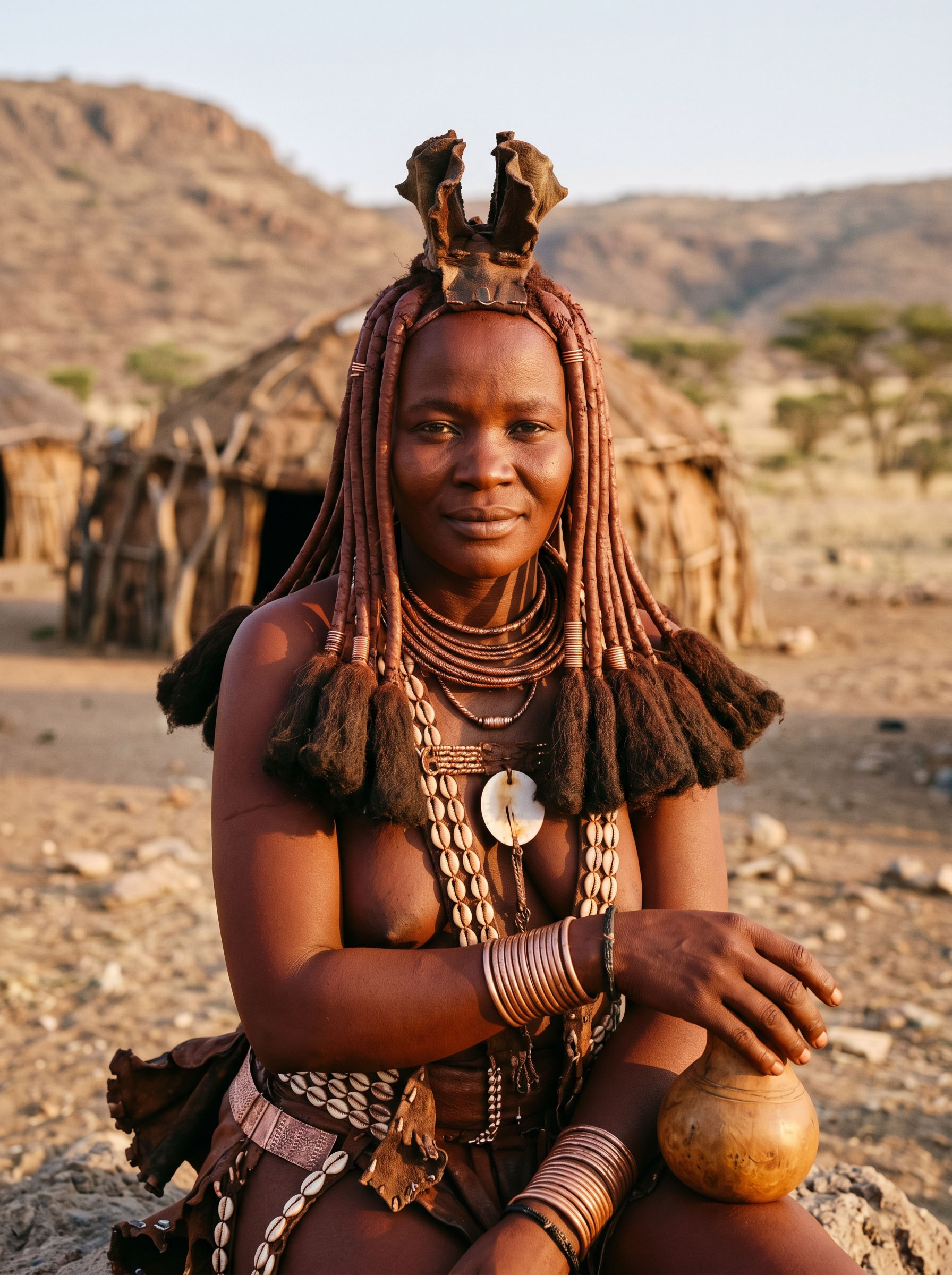
The Himba people of northern Namibia represent one of the most frequently cited examples in contemporary discussions, partly because the Himba have, by deliberate cultural choice, maintained a high degree of traditional practice in daily life. Himba women are widely known for their distinctive appearance — ochre body covering, elaborate braided hairstyles, and minimal clothing in the European sense — and for maintaining customs that outsiders often view as extraordinary precisely because they remain so intact.
Among the Himba, labia stretching is understood within a framework that ties physical form to cultural identity in an immediate and visible way. The body is a record of cultural belonging. Ethnographic fieldwork conducted in the Kunene region in the 1990s and 2000s documented that many Himba women viewed elongated labia not merely as traditional but as essential to being recognizably Himba. The body, in this framework, is a form of belonging.
Symbolism and Meaning: What the Elongated Labia Signifies
Across the regional variations documented above, certain symbolic themes recur with enough consistency to suggest they represent shared cultural logic rather than coincidence. Understanding these themes is the closest we can come, from the outside, to understanding why this practice persisted for as long as it has.
Beauty as a Cultural Construction
Beauty is never neutral. Every culture has its own grammar of beauty — a set of features, proportions, and qualities that it collectively understands as desirable. In many African traditions where labia stretching was practiced, elongated labia were simply part of that grammar. They were considered beautiful in the same way that particular hairstyles, scarification patterns, or skin preparations might be beautiful in other cultural contexts.
Historical accounts consistently note that men in these communities expressed preference for elongated labia in potential partners. This is important to acknowledge without over-reading it. In a society where marriage is the primary pathway to adult social status for women, male preference shapes female behavior — but that does not mean female agency disappears entirely. Many women who have spoken to researchers about the practice describe it as something they pursued for their own sense of completeness, not only in response to male expectations.
“The body is not born complete. It is finished by the hands of those who love you — and by your own hands, in the quiet hours you spend becoming a woman.”
— Reconstructed from oral tradition accounts collected in the Great Lakes region
Maturity, Readiness, and the Rite of Passage
In numerous traditions, the elongated labia served as evidence of a girl’s readiness for womanhood — not in a passive sense, but in an active one. A girl who had undertaken the practice had demonstrated patience, consistency, and attention to her own body. She had, in the framework of her culture, done the work of becoming a woman. This made the elongated labia a visible sign of effort and maturity, not simply a physical feature.
Historically, societies have understood maturity as something that must be actively constructed, not merely waited for. The body modification practices of countless cultures — from scarification to tattooing to tooth filing to foot binding — share this common logic: the adult body is not the natural body, but the culturally transformed body. Labia stretching fits within this broad cross-cultural pattern of marking adulthood through deliberate physical change.
Marriage Eligibility and Social Belonging
In societies where a woman’s primary social role was defined through marriage, the elongated labia carried significant weight as a marker of marriageability. Research suggests that in some communities, a woman discovered to lack elongated labia on her wedding night risked social embarrassment or worse — her family might face questions about her preparation and upbringing. In more extreme accounts (which likely reflect particular communities and periods), marriages were reportedly annulled or questioned on this basis.
This social pressure is real, and it is worth naming honestly. The practice did not exist only as a joyful expression of identity — it also existed within systems of social expectation that could carry consequences for women who did not conform. Both of these things are true simultaneously.
Sexual Pleasure and Relational Knowledge
One of the most frequently cited rationales — found in oral tradition accounts from Rwanda, Uganda, and Zambia alike — is that elongated labia enhance sexual pleasure for both the woman and her partner. Many women report that this was the framing they received from the older women who taught them: this is for your pleasure, and for the pleasure of the person you will share your life with.
Studies conducted among women in these communities have found mixed subjective reports, as one might expect from any practice that varies in method and individual anatomy. But the persistence of the pleasure rationale across cultures and centuries suggests it was not mere rationalization. It was a genuine belief, held by generations of women, about what their bodies were capable of and what intimacy was meant to feel like.
By the Numbers
14+
African nations where labia stretching has been documented by ethnographers
50%+
Of Rwandan women surveyed in one LSHTM study reported practicing or having practiced labia elongation
8–12
Typical age range (years) at which the practice traditionally began in Great Lakes cultures
100s
Of years documented through oral tradition before first European written accounts
The Architecture of a Tradition: How Knowledge Was Passed Down
Infographic
The Intergenerational Chain: How Labia Stretching Knowledge Traveled
Grandmother / Elder Aunt
Holds original knowledge; initiates the process; selects the right moment
Initiation Space
Female-only; oral instruction; practical guidance; symbolic language taught
Private Practice
Girl practices independently over months; consistency valued as discipline
Social Recognition
Marriage eligibility affirmed; adult female status conferred; community belonging established
Transmission Continues
The woman, now an elder, teaches the next generation — the cycle completes
The knowledge chain described above was extraordinarily resilient. Colonial rule, missionary influence, and post-independence modernization all applied pressure to this transmission chain, and yet in many communities it held. The persistence of the practice across such dramatically different political eras tells us something about how deeply embedded it was in women’s social identity — and how effectively women’s informal networks can maintain knowledge even in hostile environments.
Modern Perspectives: How the Practice Has Evolved
The late 20th century and early 21st century brought new pressures and new conversations. Urbanization moved young women away from extended families and the aunts who traditionally held this knowledge. Christian and Muslim missionary influence, long a factor, intensified in many regions. Western-trained medical professionals introduced unfamiliar frameworks for thinking about the practice. And eventually, global media — and later the internet — brought outside perspectives into communities that had previously operated in greater informational isolation.
The results have been varied and sometimes contradictory. In Rwanda, where the practice was associated with Tutsi cultural identity, the genocide of 1994 and its aftermath had complex effects on cultural transmission — some traditions were disrupted, others were reclaimed as part of post-genocide cultural recovery. Studies conducted in the 2010s found that the practice remained common, particularly in rural areas, but that the intergenerational transmission mechanism had shifted: many young women now learned about it from peers rather than from aunts, and practiced it alone rather than under supervised guidance.
In Zimbabwe, urban women interviewed by researchers described the practice with a mixture of nostalgia, pride, and ambivalence. Some had practiced it themselves; others had not, and felt a complex mix of relief and loss about that gap. The chinamwali tradition, of which labia stretching is one part, has faced significant erosion in urban settings, though rural communities have maintained it more consistently.
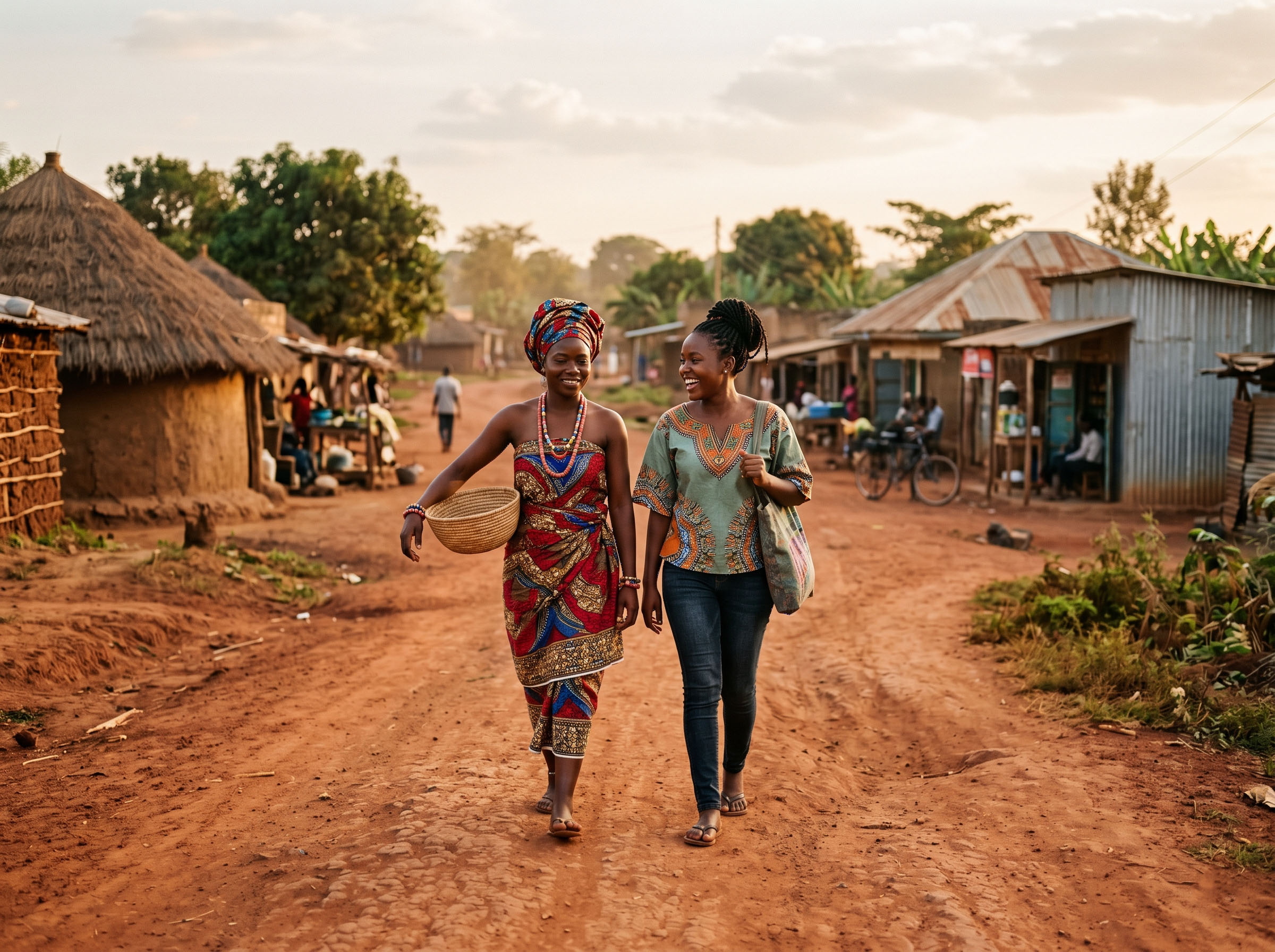
Among the Himba, deliberate cultural conservatism has meant that many practices that disappeared elsewhere remain intact. The Himba have shown a remarkable capacity to selectively engage with modernity — adopting mobile phones and solar panels while maintaining ochre body practices and traditional dress — which suggests that cultural continuity and material modernization are not as incompatible as Western assumptions often suggest.
Global Reach: When the Practice Moves Beyond Africa
One development that would have been virtually impossible to predict a generation ago is the adoption of labia stretching by women entirely outside African cultural contexts. Online communities, beginning in the early 2010s, brought women from Europe, North America, and Australia into contact with information about labia elongation — and some began practicing it independently, motivated by curiosity, body awareness, or aesthetic interest.
This development raises genuinely interesting questions about cultural diffusion, the ownership of traditional practices, and what happens when a practice is extracted from its original meaning-system and adopted in an entirely different context. These questions do not have simple answers. What they do tell us is that the practice carries something — some idea about the body, about patience, about deliberate self-cultivation — that speaks across cultural lines.
Exploring This Tradition Yourself?
If you are reading this as someone curious about the practice from a personal standpoint, a growing body of community knowledge exists specifically for adult women who have discovered labia stretching outside of traditional cultural contexts. Understanding the cultural roots — as this article attempts to document — provides a richer foundation than approaching the practice in isolation. Learning the history is not a prerequisite, but it changes the experience of the knowledge.
Myths and Misconceptions: Setting the Record Straight
Any practice as poorly understood outside its cultural context as labia stretching will accumulate misconceptions. Some of these are relatively harmless; others distort understanding in ways that affect both academic discussion and public perception. Below is an honest survey of the most common.
Myth 1: It Is a Form of Genital Mutilation
This is the comparison most frequently made by those unfamiliar with the practice and some feminist groups, and it reflects a failure to attend to the distinction between practices that remove tissue and practices that gradually modify existing tissue through non-invasive means. The World Health Organization specifically excludes non-invasive labia elongation from its definition of Female Genital Mutilation/Cutting (FGM/C). The two practices are categorically different in their methods, their intentions, their immediate effects, and their long-term physical consequences. Conflating them is not only inaccurate but actively interferes with public health efforts to address actual FGM/C by muddying the definitional waters.
Myth 2: It Was Imposed by Men
Historical evidence consistently shows that labia stretching was taught, supervised, and transmitted by women. Men were largely excluded from the initiation spaces where this knowledge was conveyed. While male preference certainly played a role in sustaining the practice, the mechanics of transmission were female. This does not resolve every question about power and agency, but it does refute the simple narrative that this was something done to women by men.
Myth 3: Women Who Practiced It Did Not Choose To
Research across multiple communities suggests a more complicated picture. Many women report having begun the practice willingly, with curiosity or pride, within a social context where it was normal and expected. Others describe social pressure that made refusal difficult. Both experiences exist, sometimes within the same community and sometimes within the same individual’s account of her own history. A practice can be culturally expected and personally chosen simultaneously — these are not mutually exclusive.
Myth 4: It Has No Physical Effect
Many women who have practiced labia elongation — both within traditional African contexts and as adult practitioners in Western settings — report increased sensitivity and enhanced sensation. Research in this area is limited and methodologically complex, but dismissing self-reported experience is its own form of error. Many women across cultures and centuries have described the practice as positive for their experience of intimacy. That report deserves to be taken seriously as a data point, even if the mechanisms are not fully understood.
Myth 5: The Practice Is Dying Out
Studies conducted as recently as the 2010s in Rwanda and Uganda found that significant portions of women in both urban and rural areas continued to practice or had practiced labia elongation. The internet has created unexpected new pathways for the practice to be transmitted to entirely new populations. Rather than dying out, the practice appears to be transforming — losing some of its original social scaffolding while gaining new communities of practitioners motivated by different but sometimes overlapping interests.
Frequently Asked Questions
A Body of Knowledge, Literally
What the history of labia stretching ultimately reveals is something that surprises many first-time readers: the degree to which the female body, across cultures and centuries, has been understood not as a fixed biological given but as a site of active cultural construction. Societies have long held opinions about what the adult female body should look like, feel like, and signify — and they have developed practices to bring bodies into alignment with those ideals.
In the African traditions surveyed here, those practices were embedded in rich social structures: female-only institutions, intergenerational knowledge chains, initiation rites that marked the passage from girl to woman. The elongated labia was not a random modification. It was a legible sign, read within a specific cultural grammar, that communicated maturity, readiness, discipline, and belonging.
That grammar is changing. Urbanization, globalization, and the internet have all altered the conditions in which the practice is transmitted and understood. New communities of practitioners have emerged who share the practice but not the original meaning-system. This is not entirely new — meaning has always traveled ahead of and behind practice, and cultures have always borrowed, adapted, and reframed traditions across contact zones.
What remains consistent is the underlying human impulse: the desire to mark, through the body, who you are and where you come from. That impulse does not require defending. It only requires understanding — and understanding, in this case, requires listening to the women who carried this knowledge, generation after generation, through whatever history threw at them.
Continue Exploring
Curious about the anatomical side of labia variation and what science says about natural differences? Read our deep-dive on labia anatomy and natural variation — what is considered normal , which provides the anatomical context that makes the cultural history here even more meaningful.
And if the historical transmission of this knowledge to adult practitioners interests you, explore our resource on discovering labia stretching as an adult woman — starting the practice later in life .


