
- Labia stretching — called gukuna, okuzina, and by dozens of other names — is one of sub-Saharan Africa’s oldest female body traditions.
- Urbanization, generational change, and global internet exposure are reshaping how — and whether — the practice is transmitted.
- Younger women in cities across Rwanda, Uganda, and Zimbabwe are the first generation to navigate this tradition without guaranteed elder guidance.
- A growing global audience is discovering the practice through documentaries and online communities, raising new questions about cultural continuity.
- Debates about preservation are happening inside African communities — not just in Western academic circles.
There is a particular quality of silence that settles over a tradition when the last person who remembers it fully has died. It is not the silence of forgetting — forgetting happens gradually, like erosion. This is something else: a sudden vacancy, the loss of a living archive.
Across parts of sub-Saharan Africa, that silence is advancing. Quietly, in cities where daughters have moved away from the villages of their grandmothers, and in village compounds where elder women watch younger generations reach adulthood without the knowledge that once defined the passage — one of the continent’s oldest feminine body traditions is changing faster than at any point in its recorded history.
Labia stretching — the gradual, manual elongation of the labia minora, practiced historically as a rite of passage, a beauty ideal, a sexual preparation, and a form of ancestral continuity — has persisted for centuries in communities across southern, eastern, and central Africa. But the conditions that sustained it: the multi-generational household, the initiation school, the trusted aunt who knew what to teach, are under pressure from every direction. Urbanization. Formal schooling. Christian and Islamic religious influence. Global media. And perhaps most consequentially, the internet, which both erases the tradition through algorithmic censorship and simultaneously carries it to audiences its originators never imagined.
This article is a documentary record of a tradition in motion — and of the human beings, communities, and debates at its center.
A Tradition Rooted Deeper Than History Can Reach
The historical record of labia stretching is uneven and largely filtered through the eyes of people who did not practice it. European missionaries and colonial administrators who encountered it in the nineteenth century left written accounts that range from clinical detachment to undisguised revulsion. Their documents are the earliest systematic records in any written form — but they are not the beginning of the tradition. By the time the first European pen touched paper to describe what it saw, the practice had already passed through generations too numerous to count.
Among the Khoisan peoples of southern Africa — among the oldest continuous human populations on the planet, with genetic lineages traced back tens of thousands of years — labia elongation was woven into the fabric of female life. It was not a ceremony with a single date on a calendar. It was something closer to a curriculum: knowledge held by elder women and transmitted to younger ones, body by body, over time. Researchers documenting oral traditions among Khoisan communities have recorded accounts of the practice being described in the same breath as fire-making and plant medicine — not as exotic ritual, but as practical, necessary knowledge.
Further north, in the Great Lakes region of East Africa, the tradition appears under its own names and within its own structures. In Rwanda and Burundi, gukuna — from a Kinyarwanda verb meaning “to pull” — was historically taught by aunts to girls in the years approaching marriage. In Uganda, it was the ssenga, the paternal aunt, who served as the primary female educator in a young woman’s life, transmitting knowledge about the body, relationships, and the meaning of adult womanhood. Labia elongation was one item in a curriculum that covered far more. In Malawi, Zambia, and Zimbabwe, researchers have documented the practice within formal female initiation rites — multi-day ceremonies structured around a transition from girlhood to womanhood, with body knowledge as a central subject.
What these traditions share — across thousands of kilometers, across languages and ethnic boundaries, across distinct historical trajectories — is the structure of transmission: elder to younger, woman to girl, body of knowledge passed in the direction of time. That structure is precisely what is now under strain.
Among the Baganda of Uganda, the ssenga — the paternal aunt — historically served as the primary sex educator and feminine guide for young women in the family. Her role was formal and culturally protected.
She taught labia elongation as part of a broader curriculum: adult relationships, bodily knowledge, and preparation for marriage. Research conducted in Kampala and surrounding communities has found that the ssenga role has adapted to urban life — some women now offer it as a private professional service in cities.
Studies suggest this adaptation keeps knowledge alive but alters its social context: what was once a family-embedded teaching is becoming a paid transaction between near-strangers.
Urbanization and the Breaking of the Chain
The single greatest threat to intergenerational transmission of any body tradition is physical distance between generations. When a grandmother lives in a village in the Eastern Province of Rwanda and her granddaughter grows up in Kigali — or in Brussels, or Toronto — the chain of teaching is not weakened. It is simply severed.
Sub-Saharan Africa has urbanized faster than any other region of the world in the past fifty years. The United Nations estimates that by 2050, more than half of sub-Saharan Africa’s population will live in cities — a shift from a historical baseline of overwhelmingly rural settlement. This is not a slow drift. It is a structural transformation of the environment in which these traditions evolved and have always operated.
Urban households in Rwanda, Uganda, and Zimbabwe are typically smaller, more nuclear, and further from the extended family networks that once made practices like gukuna or okuzina possible. A girl growing up in a multi-generational rural compound had aunts, grandmothers, and female neighbors who shared knowledge as a matter of course. A girl growing up in a two-bedroom apartment in Nairobi or Harare has none of these structural conditions — regardless of what her family values.
Research published in African studies journals in the past decade has documented this pattern with consistency. Studies conducted in peri-urban communities in Uganda found that younger women were significantly less likely than older women to have received instruction in labia elongation — not because their families had rejected the tradition in principle, but because the social infrastructure for transmitting it had dissolved around them. Many women interviewed reported that they knew the practice existed — their mothers had mentioned it, or they had encountered references to it — but had never been taught, and did not know how to seek instruction.
This creates a specific kind of cultural loss: the tradition is not forgotten. It is stranded. Known in outline, unreachable in practice.
Generational Change — When Daughters Ask Different Questions
Urbanization is the structural condition. Generational change is what happens inside it.
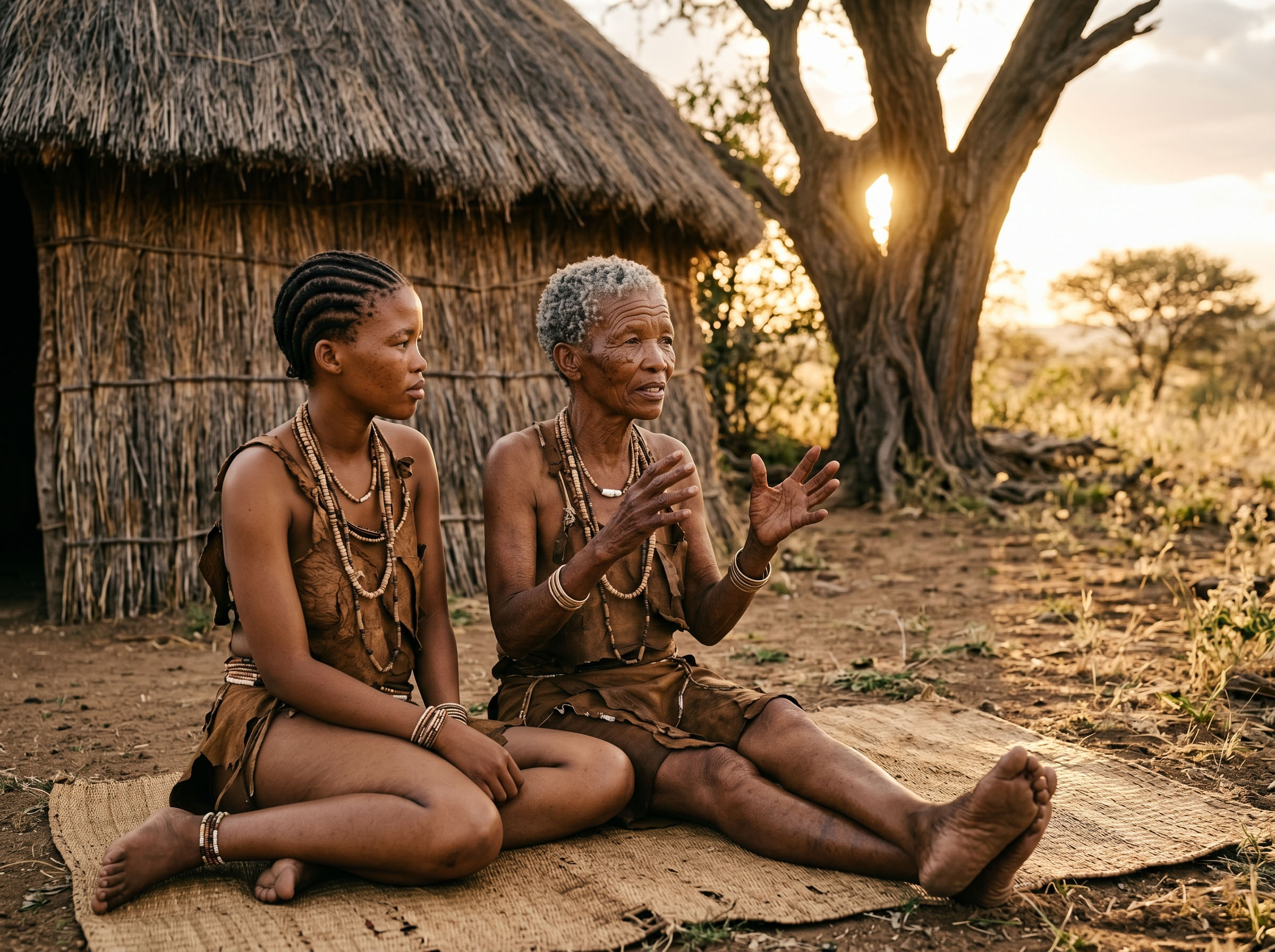
Women who came of age in rural communities in the 1960s, 1970s, and 1980s entered adulthood with a set of shared references — initiation rites, female elders, communal ceremonies — that shaped their understanding of what womanhood required. Their daughters and granddaughters are entering adulthood in a radically different environment, shaped by formal schooling, global media, and a set of social norms that often conflict directly with the body traditions of their grandmothers.
Christian and Islamic missionary influence has been particularly significant in reshaping attitudes toward indigenous body practices across the continent. Many of the communities where labia stretching was historically most embedded are now predominantly Christian or Muslim — and both traditions, as practiced across much of sub-Saharan Africa, have treated indigenous body practices with varying degrees of disapproval. Research has found that in communities with high religious observance, younger women are significantly less likely to practice labia stretching, not necessarily because they reject their cultural heritage, but because religious teaching has reframed the tradition as incompatible with modesty or moral propriety.
Formal schooling has added a different kind of pressure. Girls who spend twelve or more years in formal education — particularly in mission-founded schools, which remain common across the region — are removed from the village environment during the developmental years when the tradition was historically transmitted. They learn a curriculum shaped by global standards and often explicitly counter-posed to “traditional” practices. By the time they complete schooling, they are adults who may never have received the instruction their grandmothers would have considered foundational.
What is striking, in interviews and published research accounts, is the ambivalence many younger women express. They are not uniformly indifferent to the tradition. Many feel its absence as a loss — a gap in their connection to a maternal lineage, an unanswered question about what their grandmothers knew that they do not. The loss is not comfortable. It is specifically the loss of something that belonged to them and was not passed on.
Global Internet Exposure — The Algorithm That Cannot Tell the Difference
If urbanization broke the structural conditions for transmitting this tradition, the internet has done something more paradoxical: it has simultaneously accelerated erasure and created new pathways for discovery.
The algorithmic systems that govern the major social media platforms — Facebook, Instagram, TikTok, YouTube — operate on a blunt principle when it comes to female genital anatomy: the appearance of it, in any context, triggers removal. These systems cannot read intent. They cannot distinguish between explicit content designed for adult entertainment and a documentary clip about Khoisan body traditions filmed by a BBC crew in Namibia. Both disappear equally and immediately.
The consequences are specific and measurable. A woman in Nairobi who grew up hearing references to gukuna and wants to understand it more fully has almost nowhere to look. A search for labia stretching on major platforms returns either nothing relevant, explicit content that has nothing to do with the cultural tradition, or — in some cases — active warnings that the topic itself is problematic. The information ecosystem has made it harder to research one’s own cultural heritage than to access almost any other form of content on the internet.
Research on digital access to cultural health and body information in sub-Saharan Africa has found this to be a consistent pattern: women seeking information about traditional body practices are systematically blocked by content policies designed for entirely different purposes. The policy is blunt because the enforcement is automated, and automation at scale cannot handle nuance.
The paradox is that this erasure coexists with a genuine surge in global curiosity. Documentary culture — streaming platforms, long-form YouTube channels, podcasts covering anthropology and world culture — has introduced labia stretching to Western audiences with no prior connection to African body traditions. Women who watched a BBC documentary or stumbled onto an academic lecture series began searching for more information and found very little. Some of them found their way to the small number of educational publications that remain accessible on the topic. Others connected with communities of women — in diaspora settings, in online forums that exist just below the level of mainstream platform visibility — who were already practicing the tradition.
This is how a body of cultural knowledge survives the algorithm: in fragments, through workarounds, by the determination of individuals who want to know something and refuse to accept the internet’s refusal to tell them.
Understanding the full historical arc of how this tradition developed, and why it carried the meaning it did in communities across the continent, is essential context for grasping what is at risk of being lost. The origins and cultural foundations of labia stretching are documented in depth in the complete cultural origins and meaning of labia stretching — a resource that situates the practice within its full historical and regional context.
The World Health Organization explicitly distinguishes labia stretching from Female Genital Mutilation (FGM). FGM involves the partial or total removal or injury of external female genital organs. Labia stretching involves gradual tissue elongation through applied tension — no cutting, no removal, no structural damage. Despite this official distinction, many content moderation systems and some international health policy documents have grouped them together — an error that has caused real harm to women seeking culturally accurate information about their own traditions.
The Preservation Debate — Who Gets to Decide?
The question of whether this tradition should be preserved — and how — is being asked most urgently not in Western academic journals, but inside African communities themselves. That distinction matters.
There is a tendency in global conversations about endangered cultural practices for the preservation debate to be conducted by outside observers: anthropologists, human rights advocates, documentary filmmakers, development organizations. These voices matter. But they are not the primary voices in the room when a Rwandan mother decides whether to teach her daughter gukuna, or when a Ugandan ssenga considers whether to continue offering instruction in a city where most of her clients have never set foot in a village.
Research interviews conducted with women across multiple generations in East and southern Africa reveal a wide spectrum of positions. Some older women express grief at the transmission gap — a sense that something of value is being lost through inattention rather than deliberate choice. Some younger women are actively working to reclaim the tradition, seeking out elder teachers, connecting with diaspora communities, or finding information through the limited educational resources available online. Some women in both generations are indifferent or actively opposed, viewing the tradition as belonging to a past that formal modernity has correctly left behind.
No single position represents “African women” on this subject — and any account that suggests otherwise is doing a disservice to the complexity of the real debate. What is true across positions is that the conversation is happening, and increasingly, younger women are demanding a role in it.
The debate also intersects, in complicated ways, with international human rights frameworks. Some organizations working on women’s health in sub-Saharan Africa have treated labia stretching as a concern on the same continuum as FGM — a conflation that many women within the tradition find both inaccurate and offensive. Research has found that when outside organizations enter communities with this framing, they frequently shut down the internal conversation rather than supporting it, pushing the tradition further underground rather than creating space for honest community deliberation.
The more productive interventions — documented in a smaller number of research studies — involve organizations that enter communities with questions rather than conclusions, that listen to what women say the practice means to them, and that distinguish between practices that cause harm and practices that do not, based on evidence rather than aesthetic unfamiliarity.
What Global Adoption Means for the Tradition’s Future
There is a third current running alongside urbanization and generational change — and it flows in the opposite direction. As the tradition recedes in some of its original settings, it is simultaneously being discovered and adopted by women with no ancestral connection to it whatsoever.
Documentary film has been a significant catalyst. A number of BBC and independent productions covering African body traditions have introduced labia stretching to audiences in Europe, North America, and Australia. Women who watched these films with genuine curiosity — not prurience, but the kind of sustained attention that a good documentary commands — went looking for more information and found, as almost everyone does, that accurate educational resources were almost impossible to locate.
Some of these women eventually found their way to the practice itself. Many women report discovering it through a combination of anthropological reading, documentary viewing, and eventually, online communities where women discuss their experiences. Research exploring modern adoption outside traditional communities consistently finds that the motivation is overwhelmingly personal — body awareness, aesthetic interest, curiosity about anatomy — rather than cultural tourism or appropriation in any derogatory sense.
The question of cultural ownership is a live one, and reasonable people hold different positions on it. Some African scholars and community members have expressed discomfort with the idea of the practice being adopted without cultural context, stripped of the meaning systems that gave it significance. This is a legitimate concern, and it is worth taking seriously.
At the same time, the history of human cultural transmission does not offer a clean precedent for the idea that practices belong permanently and exclusively to their communities of origin. Tattooing, ear stretching, scarification, fasting, and dozens of other body traditions have traveled across cultures throughout human history — sometimes through conquest, sometimes through admiration, sometimes through the simple movement of people across borders. The question is less whether this movement happens — it always has — and more whether it happens with honesty, acknowledgment, and respect for the tradition’s source.
What seems clear from the research is that global adoption, when it occurs with genuine curiosity and respect, does not diminish the tradition in communities of origin. If anything, it creates a form of external documentation — a record of the practice’s existence and meaning in a world where that record might otherwise be erased.
Regional Variations — The Same Practice, Different Worlds
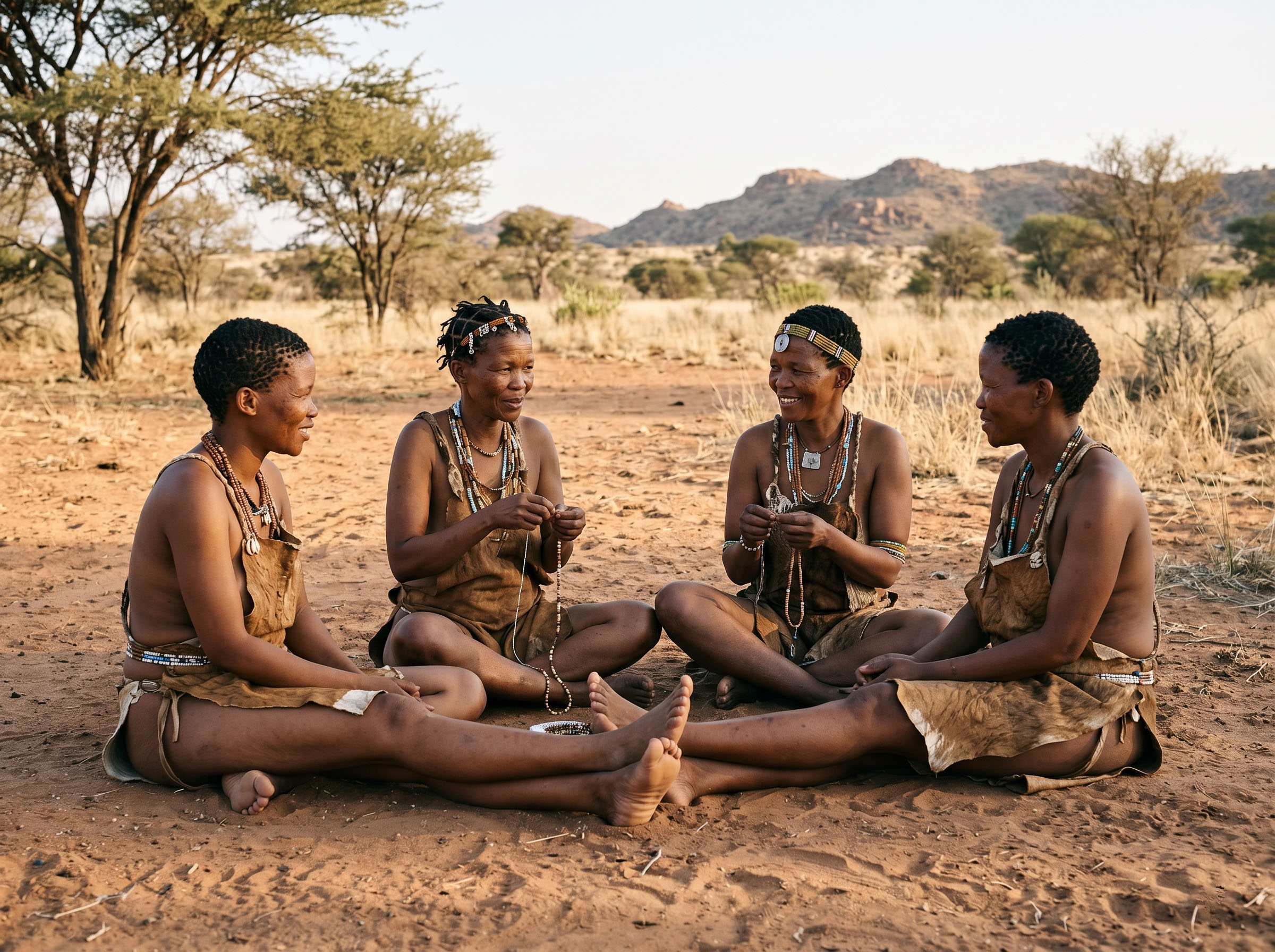
To speak of labia stretching as a single tradition is already a simplification that would frustrate any of the women who practice it in its specific cultural form. The practice varies significantly by region — not only in technique and timing, but in meaning, social structure, and the questions being asked about its future.
In southern Africa, among Khoisan communities, the tradition is ancient and its documentation is the oldest of any African group — though as noted, the earliest written accounts were colonial and unreliable. Contemporary researchers working with Khoisan communities have found that the practice persists primarily in older generations, with significant variation between rural communities where elder teachers remain and urban communities where the transmission chain has largely broken. The political and cultural reclamation of Khoisan identity in South Africa and Namibia in recent decades — driven in part by post-apartheid recognition of indigenous rights — has created new space for the tradition to be discussed publicly, though not necessarily for it to be actively practiced at the rates it once was.
In Rwanda and Burundi, gukuna occupies a specific and well-documented place in Tutsi cultural life, though its practice was not exclusive to Tutsi women. Post-genocide reconstruction in Rwanda included a complex renegotiation of ethnic identities that touched on cultural practices including body traditions. Research conducted in the 2000s and 2010s found that gukuna was still practiced among a significant proportion of Rwandan women, including urban women — often silently, individually, and without the formal social structures that once surrounded it.
Uganda presents the most institutionalized version of the modern tradition. The ssenga system, while altered by urban conditions, has partially formalized in ways that may actually increase its resilience. A professional ssenga in Kampala who teaches labia elongation as one service among many is, in a sense, doing what institutions always do with traditional knowledge: adapting its delivery to new social conditions while retaining the knowledge itself.
Zimbabwe, Zambia, and Malawi offer perhaps the sharpest illustration of the urban-rural divide. Research conducted across these countries consistently finds that the practice is substantially more common among rural women and those who went through formal initiation rites, and substantially less common among urban women without initiation experience. The correlation is not simply a proxy for age — younger rural women who underwent initiation show higher rates of practice than older urban women who did not. The initiation structure, where it survives, appears to be a more robust vehicle for transmission than family teaching alone.
Myths and Misconceptions — The Distortions That Endure
Any long-suppressed body of knowledge accumulates myths in the space where accurate information should be. Labia stretching, subject to platform censorship, colonial misrepresentation, and religious disapproval for generations, has accumulated more than its share.
That it is the same as female genital mutilation. This is the most consequential and the most frequently repeated error. The World Health Organization defines FGM as involving cutting, removing, or injuring external genital tissue. Labia stretching involves elongation through applied tension — the same mechanical principle as earlobe stretching practiced by the Maasai, or neck elongation by the Kayan women of Myanmar. The two practices are anatomically distinct. Grouping them serves a political argument about African body practices — it does not serve the women whose traditions are being described.
That it is always involuntary. Research across communities has found significant variation. In some traditional settings, there is social expectation — as there is with any rite of passage in any culture. In others, the practice is explicitly and enthusiastically chosen. Modern adoption outside traditional communities is, by definition, entirely self-directed. The narrative of universal coercion does not fit the evidence.
That it is primarily about male pleasure. While sexual significance is present in many communities’ accounts of the tradition, reducing the practice to its sexual dimension misses most of what it actually contains: identity, belonging, rite of passage, ancestral connection, and bodily self-knowledge. Many women who practice report that their primary motivation has nothing to do with their partners at all.
That it is disappearing uniformly. Studies conducted in Rwanda, Uganda, and Zimbabwe in the past decade have found ongoing practice among substantial numbers of women — including urban women. The tradition is not static and it is not uniform, but it is not dying either. It is changing, as traditions do.
That Western women who adopt it are appropriating something they have no right to. This argument, found in certain online spaces, assumes that cultural practices are permanently and exclusively owned by their communities of origin — an assumption with no historical basis. The question of respect and acknowledgment is a genuine one. The question of whether cross-cultural adoption is inherently illegitimate is not supported by how human cultural history has actually worked.
What Preservation Actually Looks Like
Preservation of an endangered cultural practice is not the same as freezing it in place. That is conservation, and it does not work with living traditions. Traditions that cannot adapt to the conditions of the people who carry them do not survive — they fossilize and are studied in museums.
Real preservation means creating conditions under which a tradition can continue to be transmitted — in modified forms, through adapted structures, by practitioners who may look and live very differently from the women who originated it. Based on research across the communities where this is being attempted, several approaches appear to be working.
Documentation by community members themselves — not just by external researchers — is creating records of oral knowledge that would otherwise die with individual elders. Women in Uganda, Rwanda, and Zimbabwe who have undertaken to record elder women’s accounts of the tradition, in their own languages and from their own cultural perspective, are producing archives that younger women in diaspora settings are actively seeking out.
The adaptation of the ssenga role in Uganda demonstrates that formal cultural structures can survive urbanization if they are allowed to change their delivery mechanism. What was once exclusively a family relationship has partly become a professional one — something that involves a commercial transaction where once there was a blood tie. This change is real and worth acknowledging. But the knowledge itself is still moving forward.
Online communities — operating in the gaps that algorithmic censorship leaves — are doing the informal work of connecting women who want to know with women who know. These communities are fragile and frequently disrupted by platform policy, but they are also self-renewing. Women who want this information are finding each other, and the persistence of that search is itself a form of cultural preservation.
Educational publications — including those that take the anthropological and historical record seriously and present it without sensationalism — are another layer. The existence of accurate, accessible written information about the tradition creates a baseline that cannot be erased as easily as a social media post.
For those who want to understand what manual labia stretching involves in practice — including how it is described in both traditional and contemporary contexts — the traditional and contemporary approaches to manual labia stretching documented on this site provide the kind of grounded, educational detail that is difficult to find elsewhere.
Modern Views on Labia Stretching — Q & A
Conclusion — What Endures When Knowledge Moves
The history of human cultural practices is not a story of preservation and loss in clean, binary terms. It is a story of movement — knowledge that travels, adapts, changes form, and occasionally disappears, but more often survives in ways its original carriers would not have predicted.
Labia stretching is in motion. In the villages of rural Rwanda, elder women still teach. In Kampala, a ssenga operates from a city apartment, adapting a centuries-old role to a twenty-first century context. In Harare, a young woman who grew up without initiation searches online for information about a tradition she knows was her grandmother’s. In London and Toronto, women from the Rwandan and Ugandan diaspora carry the tradition into new countries, sometimes practicing it, always knowing it. And in places as far from southern Africa as Norway and Canada, women who discovered the tradition through documentary films are asking questions about what it means to them and whether it might have meaning in their lives.
None of these trajectories is simple. None of them is a straightforward story of preservation or of loss. They are all true simultaneously, and they are all part of what this tradition is becoming.
What the documentary record suggests — from the earliest ethnographic accounts to the most recent research — is that the tradition has survived because it carries genuine meaning. Not a single meaning, not a fixed one, but meaning that shifts and refills itself as the people who hold it change. The task of those who value it — inside the communities where it originated, and beyond — is to make sure that when it changes, it does so with honesty about what it has been, and without the interference of those who would erase it before it has had the chance to decide its own future.
The women who carry this knowledge deserve that much.


